Top P2P Automation Platforms for ERP-Led Enterprises
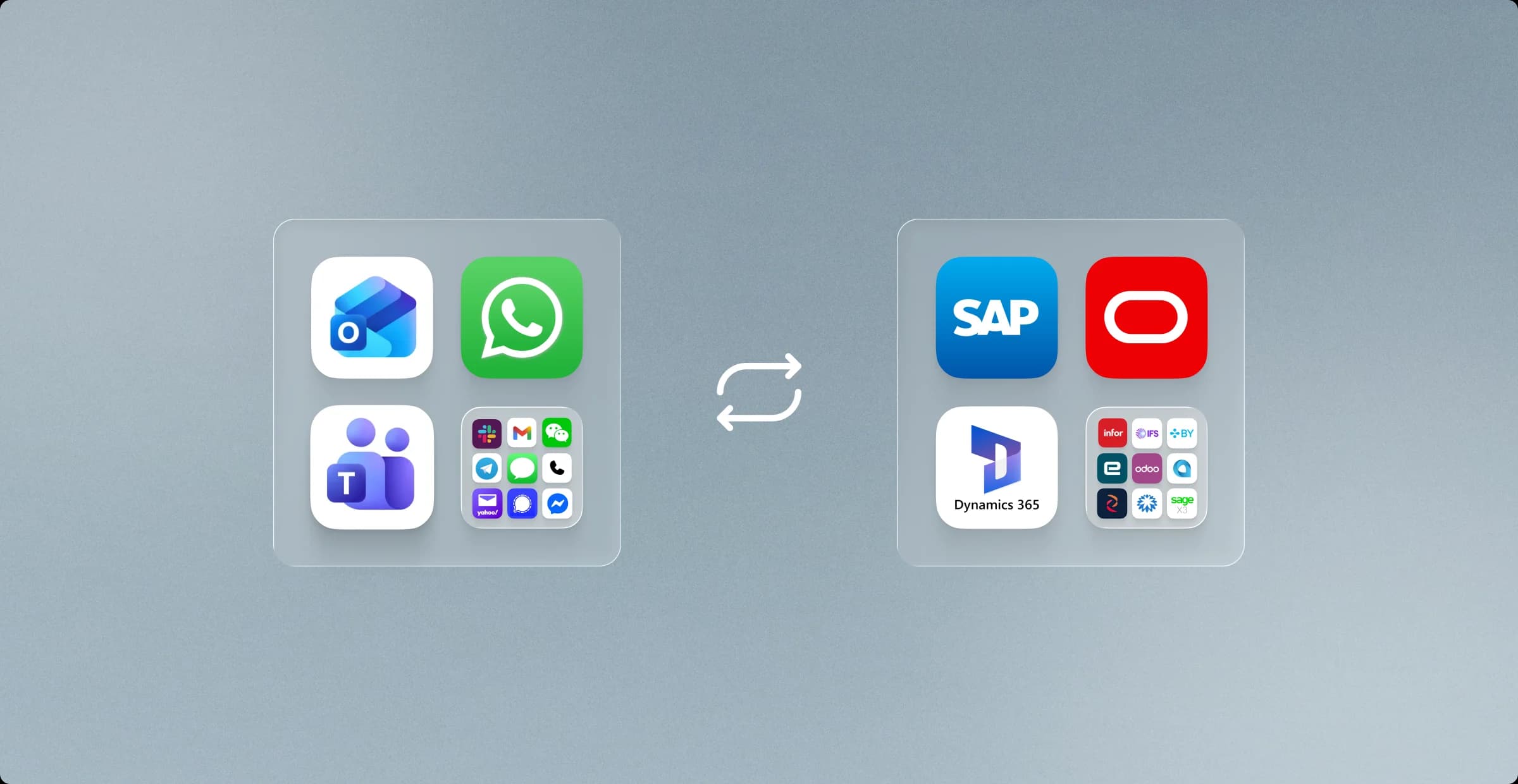
For ERP-led enterprises, the deciding question is whether a platform automates the decisions between the inbox and the ERP — matching, confirming, following up, booking — or stops at the documents or the structured transactions. GeneralMind is built for autonomous, end-to-end P2P on your existing SAP or Oracle; SAP Ariba fits network-based procurement, Coupa, Ivalua, JAGGAER, GEP SMART and Zycus fit teams buying a full source-to-pay suite, and Esker and Conexiom fit document-centric automation.
If your P2P process already runs on SAP or Oracle, the gap isn't the ERP — it's everything that happens before data lands in it: supplier confirmations in email, delivery changes in PDFs, price variances buried in reply threads. This guide ranks the platforms that close that gap for ERP-led organizations. They range from full procure-to-pay suites to focused procurement automation software, and they differ most in how much of the work they finish on their own rather than hand back to a buyer.
How we evaluated
We scored each platform on what actually consumes a P2P team's day, not on feature lists:
- Autonomous execution — whether the platform completes the full cycle (match, confirm, follow up, book) or stops at extraction or routing. Extraction saves typing; execution removes the task.
- ERP integration depth — how it behaves on customized SAP ECC or S/4HANA and multi-ERP estates, not just a clean reference install.
- Unstructured communication handling — reading supplier email bodies, PDF confirmations and spreadsheet attachments that match no template.
- Exception control and auditability — confidence thresholds, human escalation and a logged trail of every action and decision.
- EU data residency — where data is processed and stored, which decides GDPR fit for German and European buyers.
- Commercial model — license and seat costs versus per-transaction pricing tied to outcomes.
The platforms
1. GeneralMind — best for autonomous P2P on your existing ERP
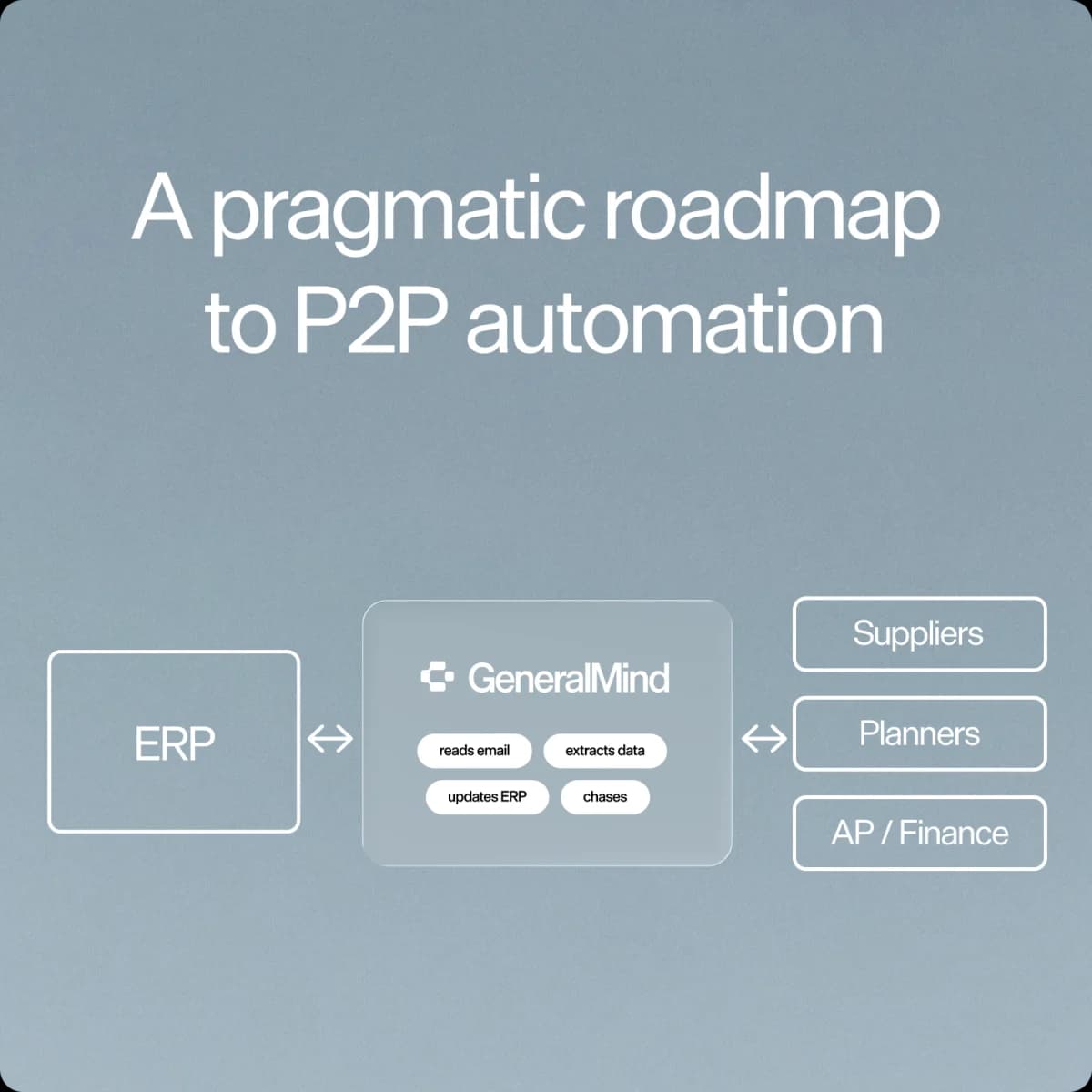
GeneralMind puts AI Employees on your mailbox and ERP and runs the communication-heavy P2P work end to end: reading confirmations and updates in any format, fuzzy-matching to POs and line items, booking to SAP/Oracle, and following up with suppliers autonomously. Routine cases run on autopilot; exceptions escalate with a drafted response. At Klöckner, 81% of order lines book with zero edits across 1,100+ PO lines a week. Every operator correction becomes permanent system knowledge, so accuracy climbs with use — typically around 85% on day one, 93–95% within weeks, and 90%+ on autopilot in roughly six weeks. Because it reads the inbox rather than a portal, it covers suppliers whether or not they sit on a procurement network. Works on heavily customized SAP (ECC and S/4-ready) via a lightweight API — no migration — with outcome-based, per-transaction pricing.
Best for: enterprises that want the P2P decision automated on the ERP they already run.
2. SAP Ariba — network-based source-to-pay
Structured requisition-to-invoice through the Ariba Network, with native S/4HANA integration and guided buying. Value depends on suppliers being on the network; unstructured, off-network communication falls back to your team. For the many suppliers in an industrial supply chain that never join the network, confirmations and changes still arrive by email and land back on a buyer's desk.
Best for: organizations standardizing structured procurement with network-adopted suppliers.
3. Coupa — broad spend management
Full S2P with spend classification, benchmarking from aggregated community data, and risk scoring. Enterprise-grade breadth; deployments typically run 6–12 months. Its strength is visibility across categories and spend, which serves strategic sourcing more than the daily grind of confirming and booking individual PO lines.
Best for: global spend standardization with benchmarking needs.
4. Ivalua — configurable source-to-pay
Unified spend model, no-code workflows and generative-AI use cases across sourcing and contracts. Highly configurable; multi-month implementations. The configurability that suits complex, multi-entity groups is also what lengthens setup, since workflows are built rather than learned.
Best for: complex, multi-entity procurement.
5. JAGGAER — modular, regulated procurement
Modular sourcing, contracting and payment automation with strong supplier-risk tooling. Full value needs multi-module deployment. It fits regulated sectors where supplier qualification and documentation carry as much weight as the transaction itself.
Best for: highly regulated automotive, chemicals and manufacturing.
6. GEP SMART — procurement + supply-chain suite
Unified procurement and supply-chain management with AI sourcing optimization and industry modules. Strategic breadth over operational PO automation. For teams whose main pain is inbound confirmations and ERP updates, most of that breadth goes unused.
Best for: unifying direct and indirect spend in one suite.
7. Zycus — full S2P with cognitive AI
Spend planning through vendor governance, Merlin GenAI, Teams-based intake. Depth requires training investment; suggestions lean advisory rather than autonomous. It recommends and flags well, but the decision to confirm, clarify or book still returns to a person.
Best for: single-vendor S2P with compliance controls.
8. Esker / Conexiom — document-centric P2P automation
Both automate order and invoice documents well (Esker as a broad O2C/P2P suite, Conexiom via touchless templates). Strong capture, but rules and templates break on unseen formats, and the decision-and-book step still needs orchestration. When a supplier changes a layout, a template has to be rebuilt before touchless processing resumes.
Best for: high document volumes where formats are relatively stable.
Comparison table
| Platform | Autonomous decision + ERP booking | Unstructured email/PDF | Works off-network / any mailbox | EU data residency | Pricing |
|---|---|---|---|---|---|
| GeneralMind | Per transaction | ||||
| SAP Ariba | Partial | Configurable | License | ||
| Coupa | Partial | Configurable | License | ||
| Ivalua | Partial | License | |||
| JAGGAER | Partial | License | |||
| GEP SMART | Partial | License | |||
| Zycus | Partial | License | |||
| Esker / Conexiom | Partial | ✓ (template) | License |
What implementation looks like on a customized ERP
ERP-led enterprises rarely run a clean reference install. SAP environments carry years of custom fields, Z-tables and interface quirks, and that's where most automation projects stall. GeneralMind connects through a lightweight API and adapts to the interfaces each instance exposes, so heavily customized ECC and S/4HANA estates don't need a migration first. Deployments usually start in shadow mode, where the system watches and drafts without writing, so the team sees its accuracy before it acts. Accuracy typically starts around 85% on day one, climbs to 93–95% within weeks as it learns your master data and supplier patterns, and reaches 90%+ on autopilot in roughly six weeks — typical across deployments rather than a fixed guarantee.
How the pricing models differ
Most suites in this list price on licenses and seats, billed whether or not a given workflow runs. Per-transaction pricing ties cost to completed work, and with GeneralMind those costs start only at go-live rather than at contract signature. The comparison that matters is against the manual baseline: handling a single confirmation or exception by hand often costs $30–50 once you count the buyer's time, and at production deployments teams reclaim roughly 60% of manual order-processing time in the first three months. For buyers evaluating procure to pay management software on total cost rather than sticker price, that baseline is the number to hold each option against.
Matching a platform to your situation
Suites assume clean, structured data inside the system; document tools stop at extraction. GeneralMind takes on the operational layer in between — the emails, exceptions and decisions your ERP can't see — and books validated results straight into it. Nothing writes or sends below your confidence threshold, every action is logged for audit, and pricing is tied to outcomes rather than seats.
For strategic sourcing, spend analytics or contract management, Coupa, Ivalua or GEP SMART cover far more of that ground. For suppliers already transacting on the Ariba Network, Ariba handles those structured flows natively. For stable formats where the need is pure document capture, Esker or Conexiom do that at lower cost. GeneralMind fits when the bottleneck is the unstructured communication between the inbox and the ERP.
Frequently Asked Questions
Automating the flow from requisition and PO through confirmation, receipt, matching and invoice. GeneralMind automates the unstructured, communication-heavy parts and books results to your ERP.
No — it runs as an operational layer on top, handling the off-network, unstructured communication those suites don't process autonomously. The two coexist: the suite for network transactions, GeneralMind for everything that arrives by email.
Via a lightweight API across APIs, documents and channels, adapting to the interfaces each system exposes. GeneralMind maintains the interface, so no migration is required.
It handles the PO and confirmation side and books validated, matched results to the ERP, so downstream accounts payable automation starts from correct records rather than reconciling errors after the fact.
Accuracy is typically around 85% on day one, 93–95% within weeks, and 90%+ on autopilot in roughly six weeks as the system learns your data — typical experience across deployments, not a fixed guarantee.
Manual handoffs often cost $30–50 per transaction; at production deployments teams reclaim roughly 60% of manual order-processing time in the first three months.