7 Top AI Procurement Platforms for German Buyers in 2026
For German industrial buyers, the deciding question is whether a platform reads supplier emails in German and English, syncs with SAP, and follows up autonomously, or only works on structured data. GeneralMind is built for autonomous supplier coordination and PO tracking; Keelvar fits strategic sourcing optimization, and Ivalua, GEP SMART, Zycus, Coupa and JAGGAER fit broader source-to-pay needs.
Your procurement team doesn't have a capacity problem — it has a repetition problem. Open inbox, read supplier email, match PO number, check delivery date, chase confirmation, update ERP, repeat. This article ranks the platforms worth evaluating for supplier coordination and PO tracking in Germany in 2026, from full source-to-pay suites to the AI procurement automation that handles the daily inbox work directly.
How we chose
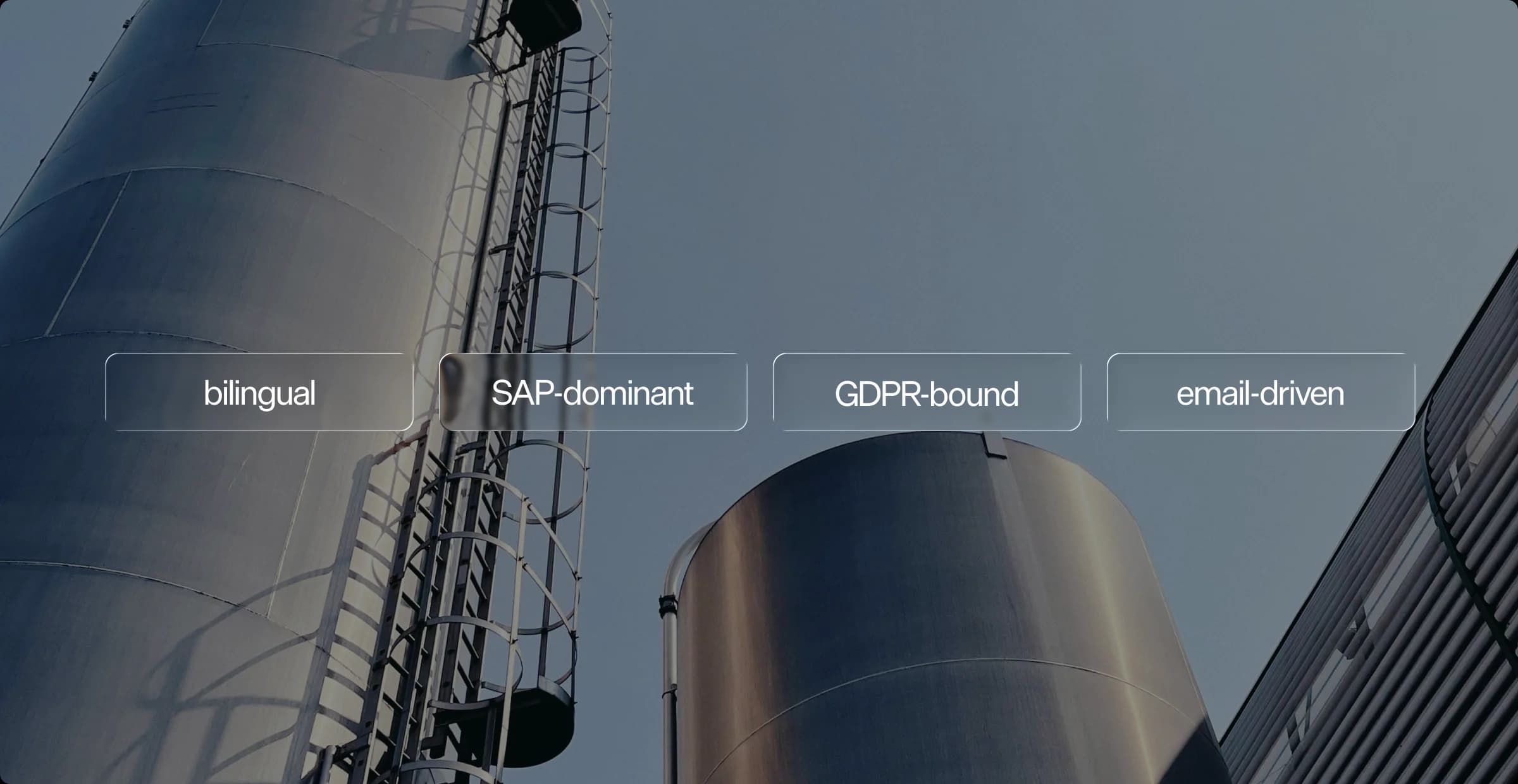
German industrial procurement has specific constraints — bilingual, email-driven, SAP-dominant, GDPR-bound — so we scored each platform against the conditions it will actually work in:
- Unstructured communication handling — reading German and English supplier emails, PDF confirmations and spreadsheet attachments, since that's where most of the volume arrives.
- ERP synchronization — direct, bi-directional sync with SAP and other systems on customized installs, not just a clean demo environment.
- Supplier-coordination depth — matching messages to open POs, drafting clarifications and chasing missing information without a person prompting each step.
- Data residency — where data is processed and stored, which decides GDPR fit for a German buyer.
- Time to value — weeks over your existing systems versus multi-quarter suite rollouts.
- Audit readiness — a logged trail of every action for internal and supplier audits.
The 7 platforms
1. GeneralMind — top for autonomous supplier coordination
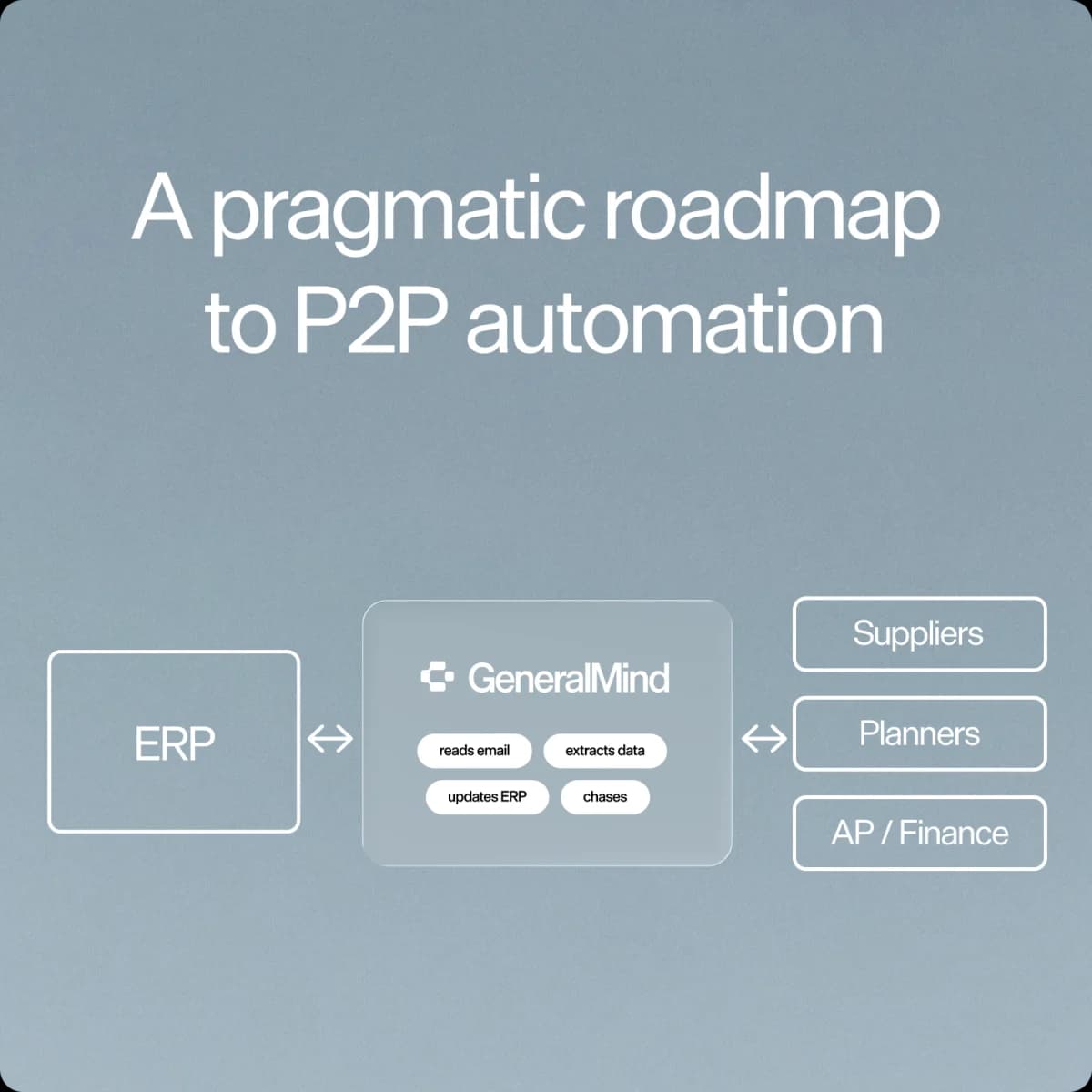
GeneralMind handles the operational middle zone traditional automation misses: too structured for "needs a human," too messy for RPA that breaks when a layout changes. It reads incoming supplier emails in German and English, matches messages to open POs, drafts clarifications, and books ERP-ready updates. At Klöckner, 81% of order lines are booked without a human touch; at other DAX and MDAX companies, teams have redirected effort toward supplier relationships. Delivery-date changes, price variances and partial-shipment notices each match back to the right PO line in SAP, and a line that doesn't reconcile becomes a drafted supplier reply rather than a manual task. Certified to ISO 27001:2022, ISO 27701 and SOC 2 Type II, with data processed in the EU (Frankfurt, DR Stockholm). Works over your existing mailbox and a lightweight API — no SAP migration — with outcome-based pricing.
Best for: teams drowning in supplier email and manual ERP updates.
2. Ivalua — configurable source-to-pay
A full S2P suite with a unified spend data model, no-code workflows and generative-AI use cases across sourcing and contracts. Highly configurable for multi-entity operations; implementations can run several months. It suits groups that want to standardize purchasing policy across entities; the trade-off is a build-and-configure project rather than a system that learns your inbox.
Best for: complex, global procurement structures.
3. GEP SMART — procurement + supply chain orchestration
Combines procurement, supply-chain planning and supplier management with industry-specific modules and AI sourcing optimization. Broad coverage; full deployment needs cross-department alignment. Its manufacturing modules help unify direct and indirect spend, though the operational task of confirming and booking individual orders is a small part of what it does.
Best for: manufacturers unifying direct and indirect spend.
4. Zycus — full-suite with compliance tooling
Spend planning through vendor governance, AI supplier discovery, contract lifecycle management and Teams-based intake. Depth requires training investment. Controls and audit trails are strong, which fits regulated buyers; the AI leans toward recommendation rather than autonomous booking.
Best for: regulated industries needing built-in controls.
5. Keelvar — sourcing optimization
Autonomous sourcing bots and scenario-based award optimization for complex, multi-round events, proven at large industrial firms. Focused on the sourcing phase, not end-to-end procurement. It shines when you run large, multi-variable tenders for direct materials; once the award is made, day-to-day PO coordination sits elsewhere.
Best for: multi-variable sourcing and direct-material negotiations.
6. Coupa — broad spend management
Full S2P with AI spend classification, anomaly detection and community-intelligence benchmarking from aggregated data. Enterprise-grade; deployments often run 6–12 months. Benchmarking spend against aggregated community data helps category managers; it does less for the buyer clearing a full inbox each morning.
Best for: global standardization with benchmarking needs.
7. JAGGAER — modular, regulated environments
Modular sourcing, contracting and payment automation with strong supplier-risk assessment. Scalable but requires significant onboarding and multi-module deployment for full value. Automotive and chemicals buyers value its supplier-risk depth; reaching that value means deploying several modules.
Best for: highly regulated automotive, chemicals and manufacturing.
Comparison table
| Platform | Unstructured email handling | Autonomous PO tracking | Time to go-live |
|---|---|---|---|
| GeneralMind | Weeks | ||
| Ivalua | Months | ||
| GEP SMART | Months | ||
| Zycus | Months | ||
| Keelvar | Months | ||
| Coupa | 6–12 months | ||
| JAGGAER | Months |
Why unstructured email handling is the deciding factor
German industrial supply chains run on email. Confirmations, delivery changes and partial-shipment notices arrive as messages with PDF attachments, not clean EDI feeds. Traditional platforms need the data structured before they can act, which means a person structures it first — the exact step that eats the day. GeneralMind reads it as it arrives, matches it to open orders in SAP, and escalates only genuine exceptions — with a drafted response attached — so the hours saved go back to relationship and negotiation work. The gap widens with supplier count: a buyer managing a few hundred suppliers sees dozens of format variations a week, and each one is a template a rule-based tool would need built and maintained.
Sourcing suites vs. operational coordination
Most platforms here are strategic sourcing or source-to-pay suites, built to run tenders, manage contracts and analyze spend. That work matters, but it isn't the repetition that consumes a buyer's day. Reading a supplier's reply, matching it to the right PO line and updating SAP is operational coordination — the part traditional procurement automation software leaves to a person. Reading the two categories as complementary rather than competing usually gives the cleaner shortlist: a sourcing suite for the negotiation phase, an autonomous layer for the daily order flow.
Compliance and data residency for German buyers
For a German buyer, where data is processed is a procurement question, not just an IT one. GDPR governs supplier and personal data in every confirmation, and many enterprises require processing inside the EU. GeneralMind holds ISO 27001:2022, ISO 27701 and SOC 2 Type II, processes data in Frankfurt with disaster recovery in Stockholm, and keeps each customer's data isolated rather than using it to train third-party models. Several suites in this list offer EU regions as a configuration; confirm the specific data-residency terms in writing before signing.
Frequently Asked Questions
Software that automates procurement tasks — supplier coordination, PO tracking, ERP updates — using AI. GeneralMind specializes in the unstructured supplier communications that traditional systems can't process.
GeneralMind connects through a lightweight API, reads supplier emails, matches them to open POs and updates dates, quantities and confirmations automatically — no migration or major IT project.
Yes — it reads supplier emails and attachments in German, English and other languages, matches each to the open PO, and drafts clarifications in the same language when a line doesn't reconcile.
Yes. Because it works over the mailbox rather than a network, it covers suppliers whether or not they've joined a portal — which is most of the long tail in an industrial supply chain.
GDPR, ISO 27001 and SOC 2 Type II. GeneralMind holds ISO 27001:2022, ISO 27701 and SOC 2 Type II with EU data residency in Frankfurt and disaster recovery in Stockholm.
Weeks, not quarters, over your existing mailbox and ERP. Pricing starts only when you're live in production.